The company and the moment
The best seller is a stone.
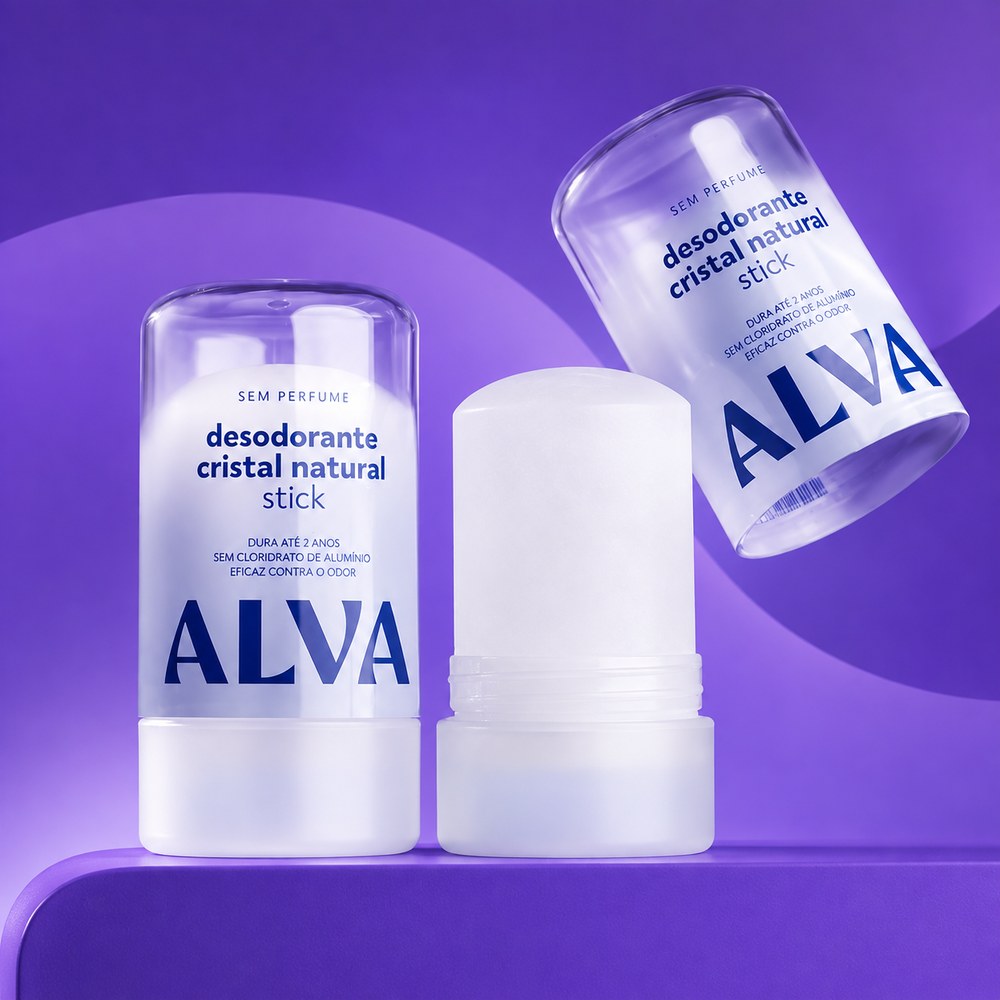
Alva sells natural personal care and was already on the shelves of Brazil's biggest retailers. Selling direct was the half nobody had built.
- The product
- A crystal stick of potassium alum, a natural mineral, and the only ingredient in the formula.
- What is missing
- No aluminium chlorohydrate, which is exactly what makes a conventional antiperspirant work.
The problem
The domain was burned before I wrote a single email.
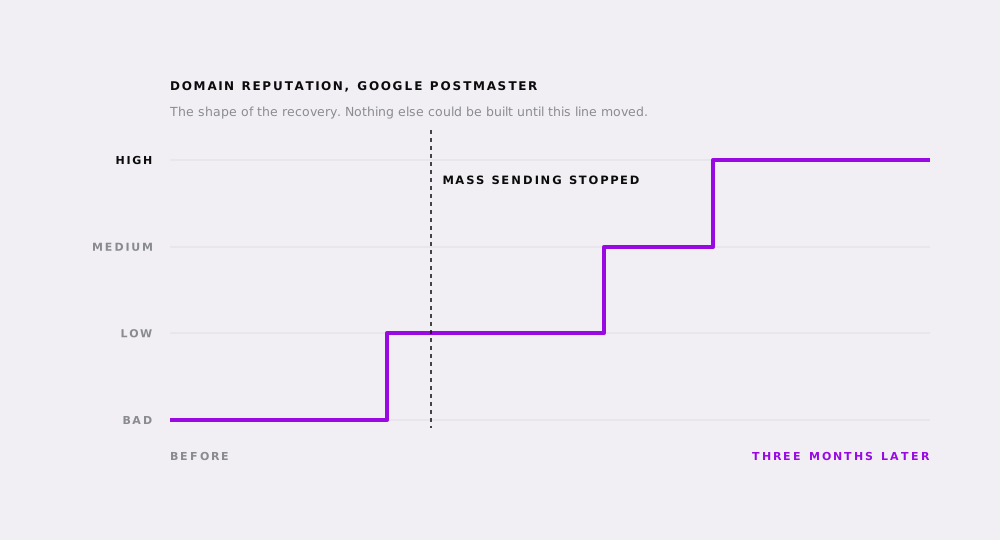
The first thing I looked at was not the base or the calendar. It was Google Postmaster Tools. The domain reputation sat at Bad, which is the floor. The CRM operation that came before had been sending in bulk to people who had never asked for it, and the providers had already drawn their conclusion.
At that level nothing downstream matters. A better subject line does not help an email that lands in spam. Segmentation does not help a message nobody sees. Every plan on the table depended on a number that had to move first.
- Mass sending stopped. No more batch-and-blast. The volume that was doing the damage was switched off before anything else was tried.
- Only qualified contacts received mail. Sending was cut back to people with real engagement history, which meant sending to far fewer people on purpose.
- Cadences rebuilt around consent. Communication flows were restructured so that only people who had actually asked for that message received it.
- Engagement seeded from the inside. Colleagues opened, replied and marked as important, which is what teaches a provider that a domain is worth delivering. Replies count for more than opens.
The segmentation
Three groups, defined by what people had already bought.
With delivery restored, the base could finally be treated as a base. I structured it on RFV, recency, frequency and value, and drew three groups with rules simple enough that anyone in the company could say which group a customer belonged to.
New buyers
One purchase in twelve months
Bought once and stopped. The whole job here is the second purchase, and the window for it is shorter than most people assume.
To loyalise
Two or more purchases, different products
Already came back, and already crossed between categories. This is the group where the range does the selling, not the discount.
Diamond
Above R$2,000 in twelve months
Frequent buyers whose total spend over the period passed R$2,000, several times the average ticket. Small in number, heavy in revenue, and the group that pays for the programme.
Each group got its own reason to hear from the brand. The same product email reads differently to someone who bought once in March and to someone who has spent two thousand reais across four categories.
One contact, two channels
Email and WhatsApp stopped being two operations.
Email carried the reach and WhatsApp carried the answer. Someone who ignored a message in the inbox would reply to the same message on WhatsApp, so the two channels were built as one journey rather than two calendars that happened to overlap.
The connection was made through the API. Klaviyo holds the trigger and the timing, a webhook hands the contact over to WhatsApp through Huggy on the official API, and the automation layer runs on n8n. The customer never sees a handover. Internally, the same contact record moves between the two channels inside a single flow.
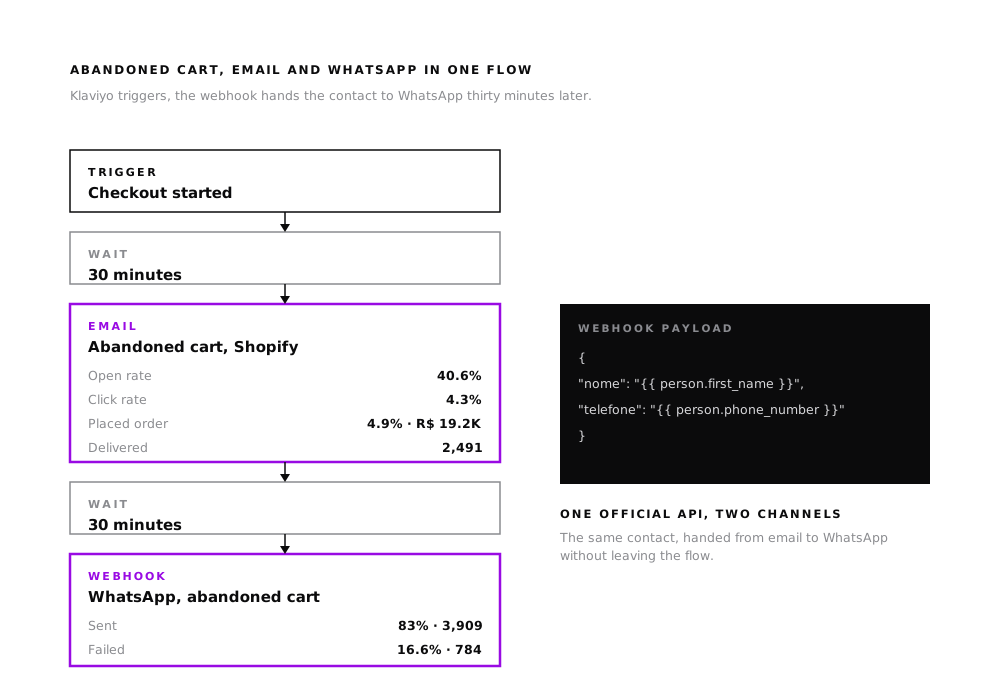
The webhook is honest about its own failure rate: 83% of the handovers went through and 16.6% failed, mostly on numbers that were never valid. Knowing that number is what allows a phone field to be treated as data rather than decoration.
What email did once it could land
Spend grew 2.6 times. Revenue grew 7.
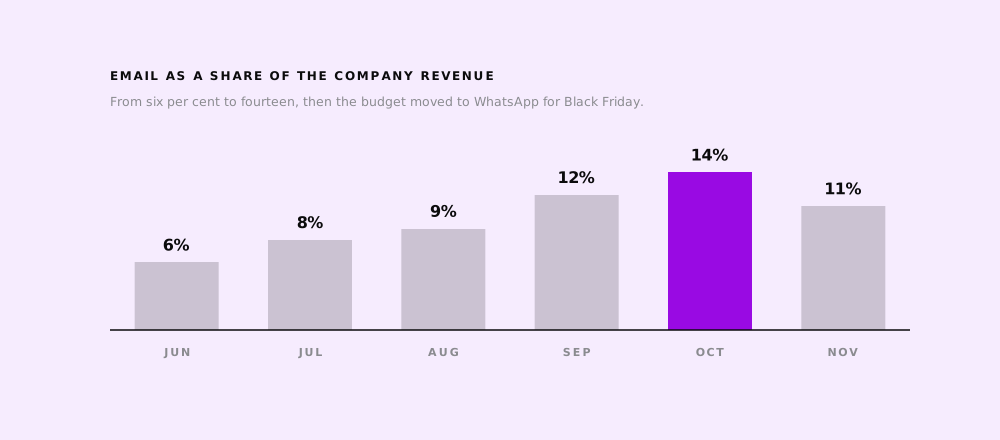
The six months below start after the repair, with the domain already delivering. Investment went from R$2.7k to R$7k a month, and revenue attributed to email went from R$18 thousand in June to R$130 thousand in October. Both lines rose. They just rose at very different rates, and the distance between them is the return.
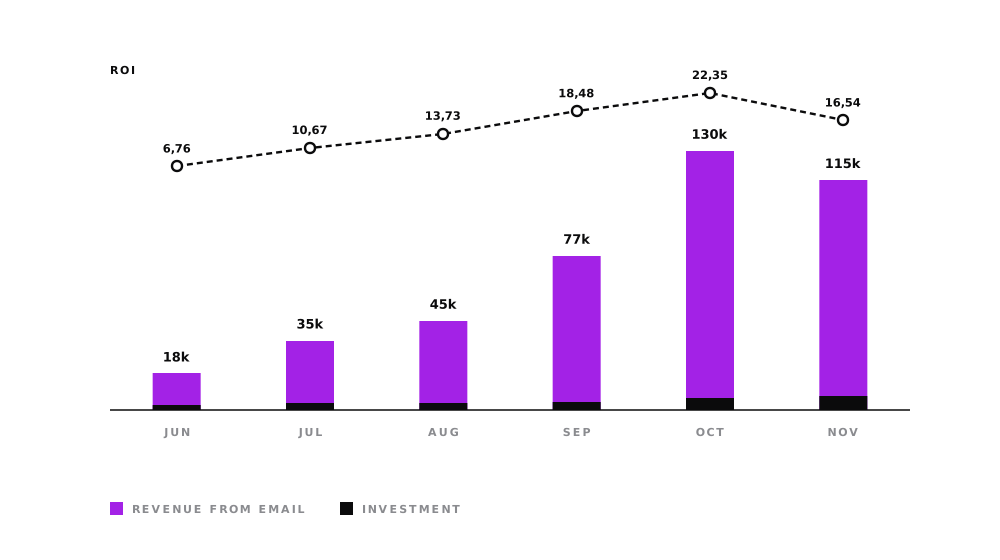
The number that mattered internally was not the revenue on its own. It was the share: in October email reached fourteen per cent of everything the company billed, which is what turns a channel into a line item people defend.
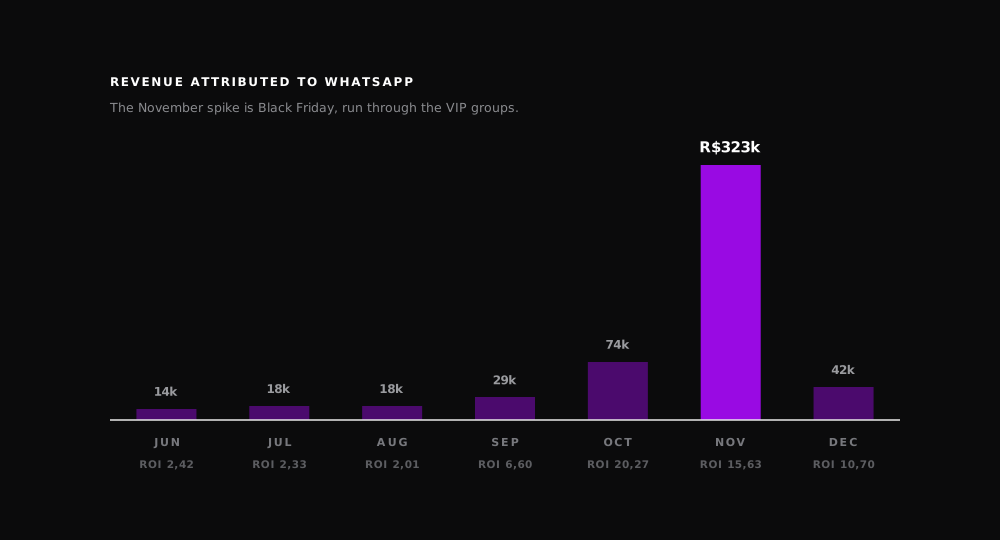
November is lower on both charts, and the reason is in the next section. That was the month the budget moved to WhatsApp for Black Friday, where the same money returned R$323 thousand. The email line did not break. It was outbid internally, on purpose.
The emails
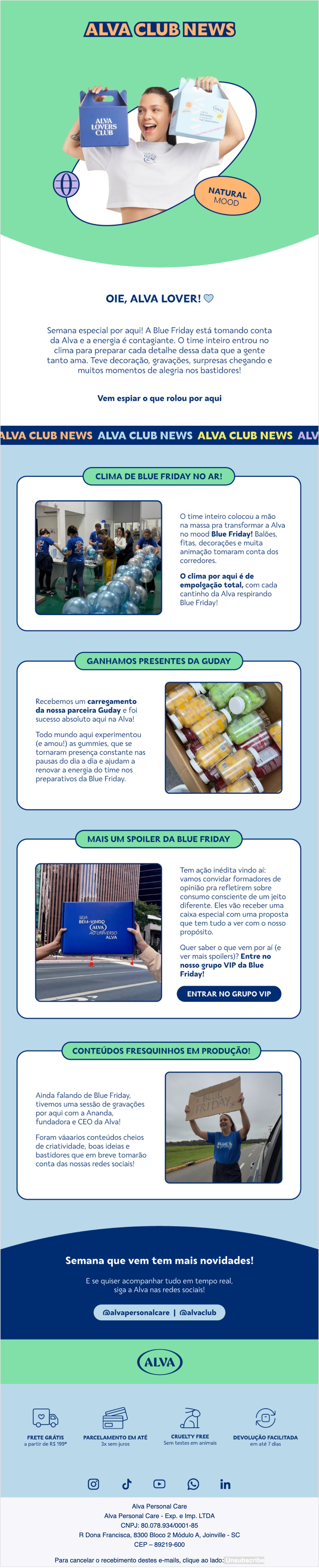
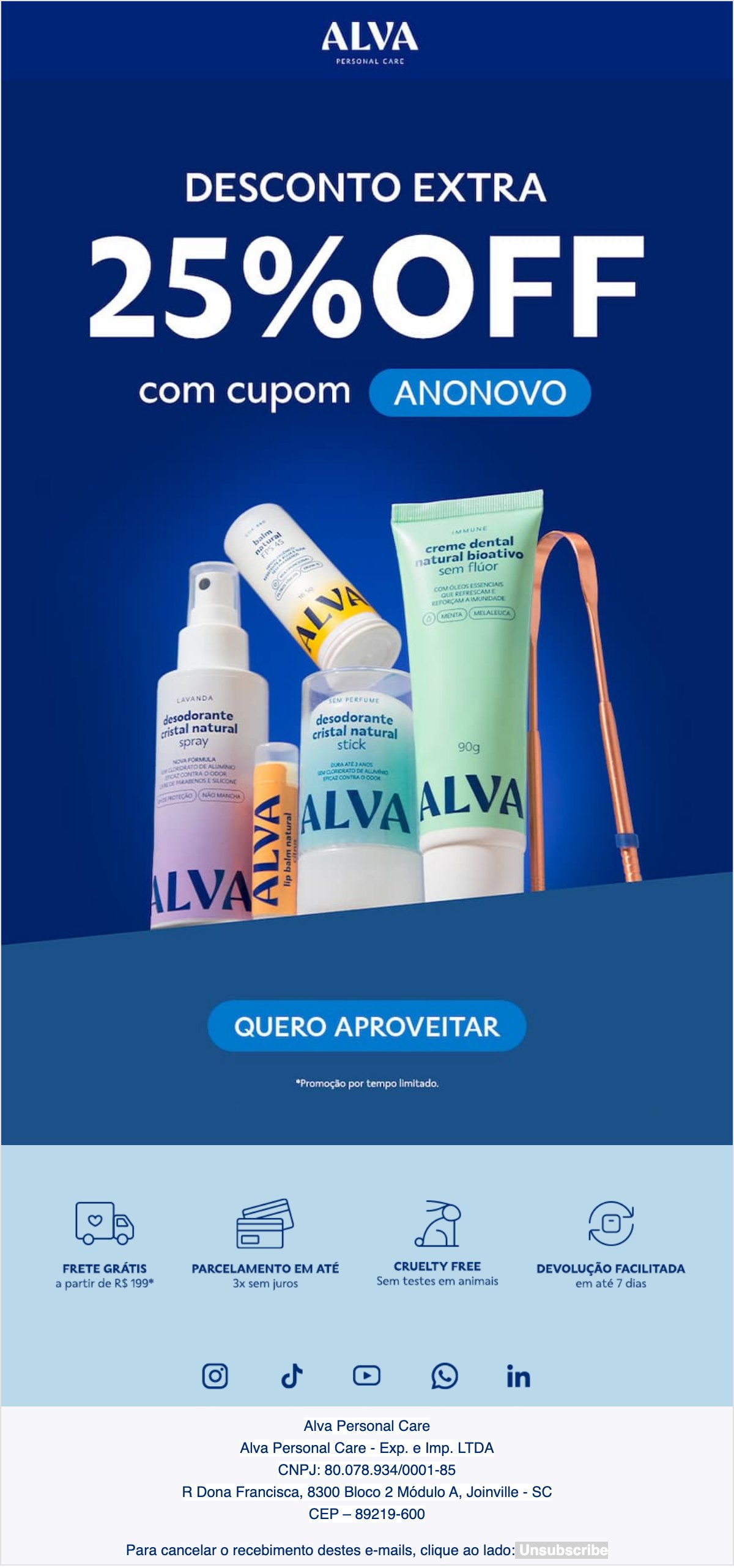
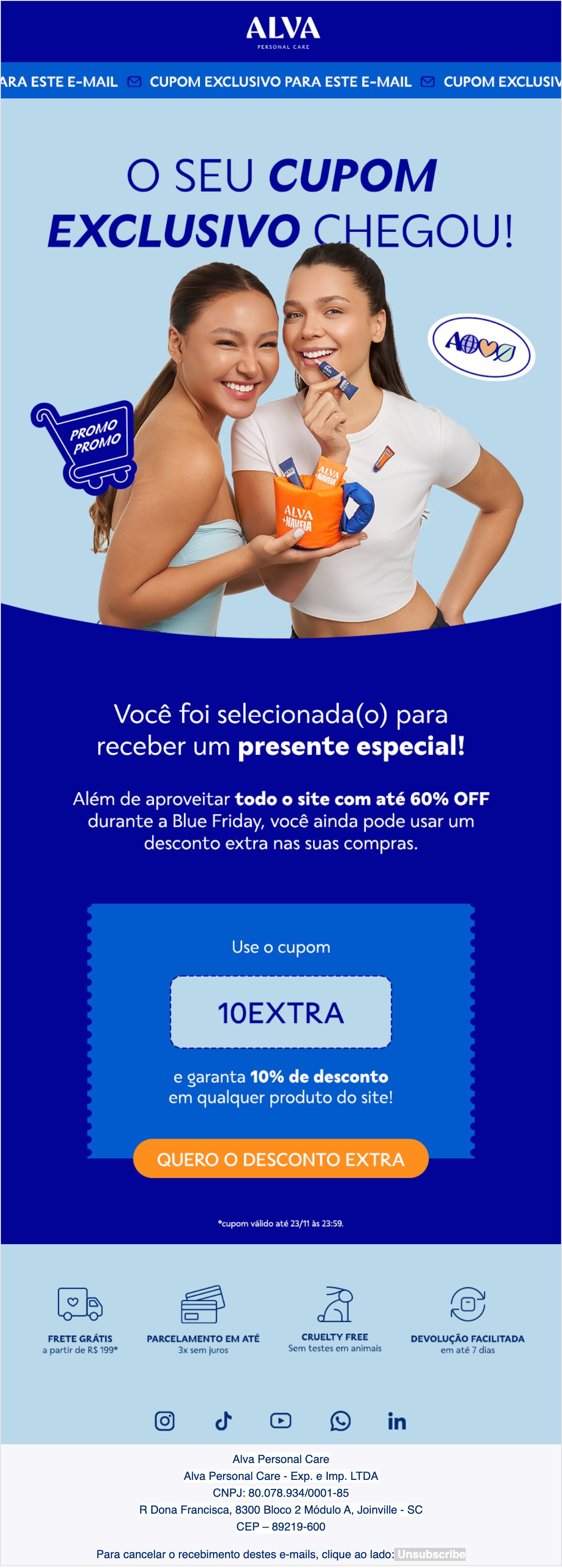
What the segmentation actually looked like in an inbox.
Six pieces from the programme, each one built for a group rather than for a date. Win-back for the ones who went quiet, range for the ones who only bought once, credit and coupon for the segments where nothing softer moved the needle.
Three of them carry animated heroes. Hover any card to scroll the piece, or open it full size.



Black Friday
The offer was bought three weeks before anyone else was buying.
Black Friday punishes latecomers twice. The auction price of attention climbs as the date approaches, and every competitor is saying the same thing on the same day. Arriving on time is the most expensive way to arrive.
So the offer moved forward. The main product, the crystal deodorant, would carry an exclusive discount valid only until 30 November, and three weeks before the date I started buying audience into VIP WhatsApp groups instead of into a shopping cart. Inside the groups people were nurtured and educated on what the product actually does, which is a conversation nobody has time for during Black Friday week.
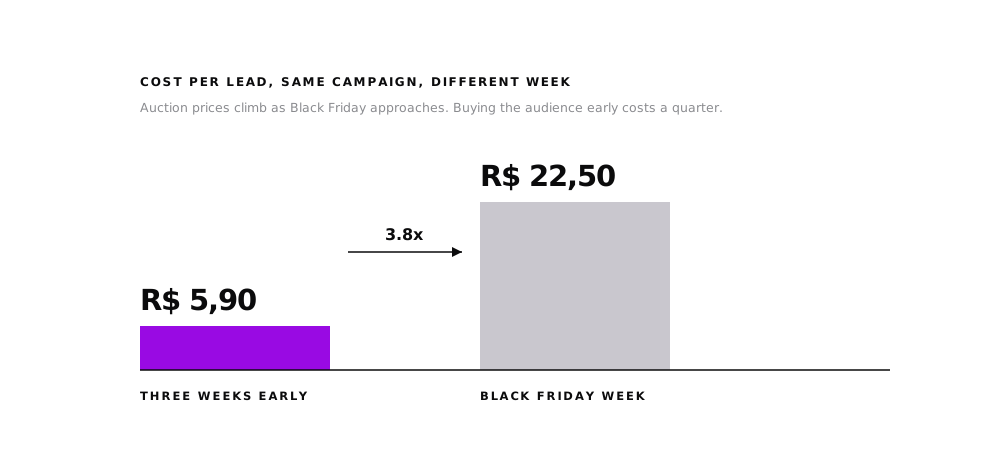
Cost per lead during the nurture window was R$5.90. The same lead bought in Black Friday week would have cost R$22.50. Nearly four times the price for a worse conversation.
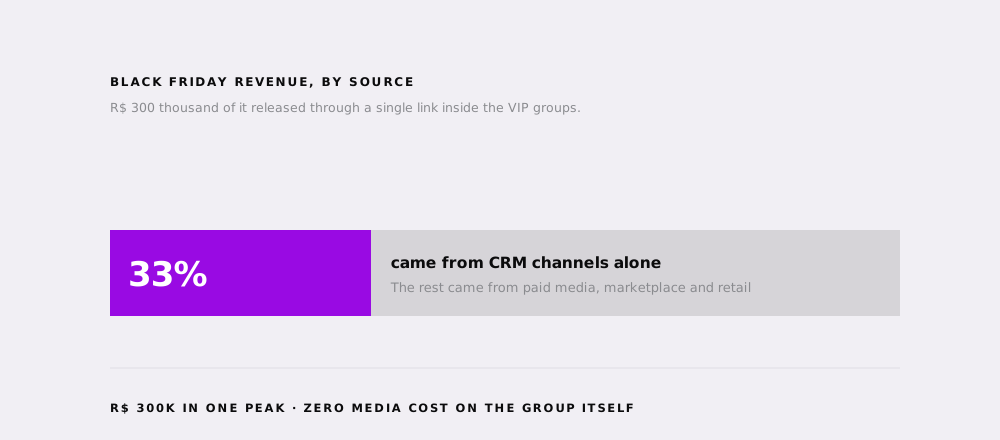
On the day the offer opened, a single link went into the groups. That link produced R$300 thousand, which is a third of everything the company billed that Black Friday, from CRM channels alone and on a group that costs nothing to send to once it exists.
What I take from it
The order mattered more than any individual tactic. Nothing in this case would have worked in a different sequence: fix delivery, then segment, then connect the channels, and only then go looking for a peak.
The other lesson is about timing rather than creativity. The Black Friday result did not come from a better offer than the competition. It came from buying the audience when nobody else was bidding, and from owning a channel where reaching them again costs nothing.